The cricket bat has probably evolved more than the game itself throughout the years. Yet, through all the generations, it has been a significant piece of equipment in one's cricket arsenal. From the extremely primitive models to the ultramodern ones available today, this piece of equipment has changed greatly along the way. Let's travel through its history to discover the most iconic bat brands that have transformed the game forever.
A Glimpse from the Past: The History of the Cricket Bat
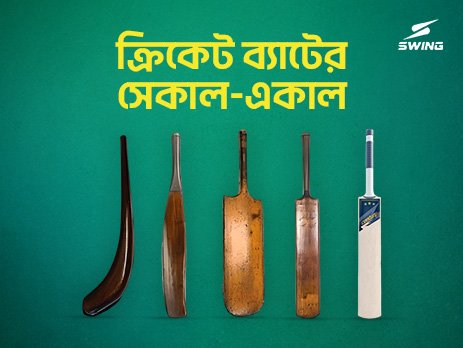
Image Source: HereCricket bats, as we know them today, look nothing like they did in the early days of the game. When cricket was first played in the 16th century, bats resembled hockey sticks with a curved design. The reason? Bowlers delivered the ball underarm, requiring batsmen to adopt a sweeping motion.With the 18th century on its dawn, and bowlers changed to an over-arm action, it has been further introduced to a straighter bat, very similar to that of what we have today. Around this time, willow became the main wood from which bats were manufactured owing to its toughness and shock absorption qualities. Up till today, white willow, particularly English willow, is considered as the golden standard for cricket bats for professionals.Over the years, bat sizes, shapes, and weights have changed in different players trying to adapt the design to get the best possible performance. In the 20th century, it became broader and heavier to hit more powerful blows. Modern cricket bats are now made with more advanced pressing techniques, thick edges, and excellent balances to suit a variety of playing styles.
The Legends: Significant Cricket Bat Brands
Over the years, several bat manufacturers have gained legendary status for crafting high-quality bats used by some of the greatest cricketers. Here are a few of the most influential brands:
Gray-Nicolls
It is one of the oldest and most reputed bat manufacturers which have established their foundation back as early as in the 19th century in the UK. Gray-Nicolls shows great promise in high-quality English willow bats, and they have been a favorite of numerous top cricketers since ages gone by. The bats are known to be lightweight yet powerful, with high pickup and balance. Sir Vivian Richards, Alastair Cook, and Kane Williamson are a few big names who have made great innings with Gray-Nicolls.
Kookaburra
Another Australian brand that's synonymous with power-hitting, Kookaburra has been a house for cricket equipment since 1890. Their bats are designed in such a way so that they are most favorable to aggressive styles, making them thick-edged, sportsmanlike big sweet spots, and innovative weight distribution. Most popular with the international cricketers are the Kookaburra Kahuna and Ghost range. Legends like Ricky Ponting, Jos Buttler, and AB de Villiers have used their bats incalculably to great effect.
Gunn & Moore (GM)
Gunn & Moore (GM) has established itself in England since 1885 on the lines of perfectly handcrafted bats. GM has focused precision engineering with the latest techniques in manufacturing to enhance the performance. GM bats have high durability and serve a wide range of playing styles from all over the globe. Players such as Ben Stokes, Ross Taylor, and Shane Watson have faith in those bats based on their cooperativeness and reliability. The GM Noir, Icon, and Diamond series are among the most sought-after models.
SS (Sareen Sports)
The Indian giant SS (Sareen Sports), formed in 1969 as a small Indian variant and now emerged to be one of the major brands in cricket bat manufacturing. All the bats made by SS are produced from fine British and Kashmir willow, which provides outstanding stroke making and longevity for the players. It started becoming famous after its association with legends such as Sehwag, Dhoni, and VVS Laxman. Well-known products include the SS Ton and SS Gladiator, which offer the best build quality and are power-packed.
MRF
Originally based on tires, MRF entered into production of cricket bats and went on to make waves around the world with associations with legendary cricketing icons. Made famous by Sachin Tendulkar, MRF bats have now created the identity of excellence. Year-on-year, players from Virat Kohli to Brian Lara and Steve Waugh have been endorsing MRF bats, making them one of the most coveted brands in world cricket. The MRF Genius and MRF Chase Master series are particularly unrivalled for their capability to balance note and stroke-making ability.
Spartan
In this regard, Spartan is a new-brand-launched company that opened its bag by gaining contracts with the likes of MS Dhoni, Chris Gayle, and Michael Clarke. Spartan bats, built for power-hitting, have massive profiles with thick edges and weightless designs. Popularized because of the T20 era, the brand fits aggressive batsmen who flamboyantly shoot big with their strokes. The Spartan CG Authority and MSD7 series are among the popular modern-day bats.
The Future of Cricket Bats :Ever-evolving with technology, cricket bats evolve even more every year. Thicker edges, thinner and lighter profiles, and better pressing techniques are needed to catch up with modern needs. Some companies are even testing carbon-fiber reinforcements and hybrid materials to improve bat life and strength. Yet such massive things do not change the spirit of the game. A cricket bat remains an extension of a player's skill and style, whether it is a graceful cover drive or a huge six over midwicket.
Final Thoughts The cricket bat has traveled a long way from its crude curved shape into the lethal blades we see today. A budding cricketer or an avid fan recognizes that a deeper knowledge of the history and significance of different bat brands adds to the appreciation of the game. If you're looking for high-quality English willow cricket bats, explore our collection here!